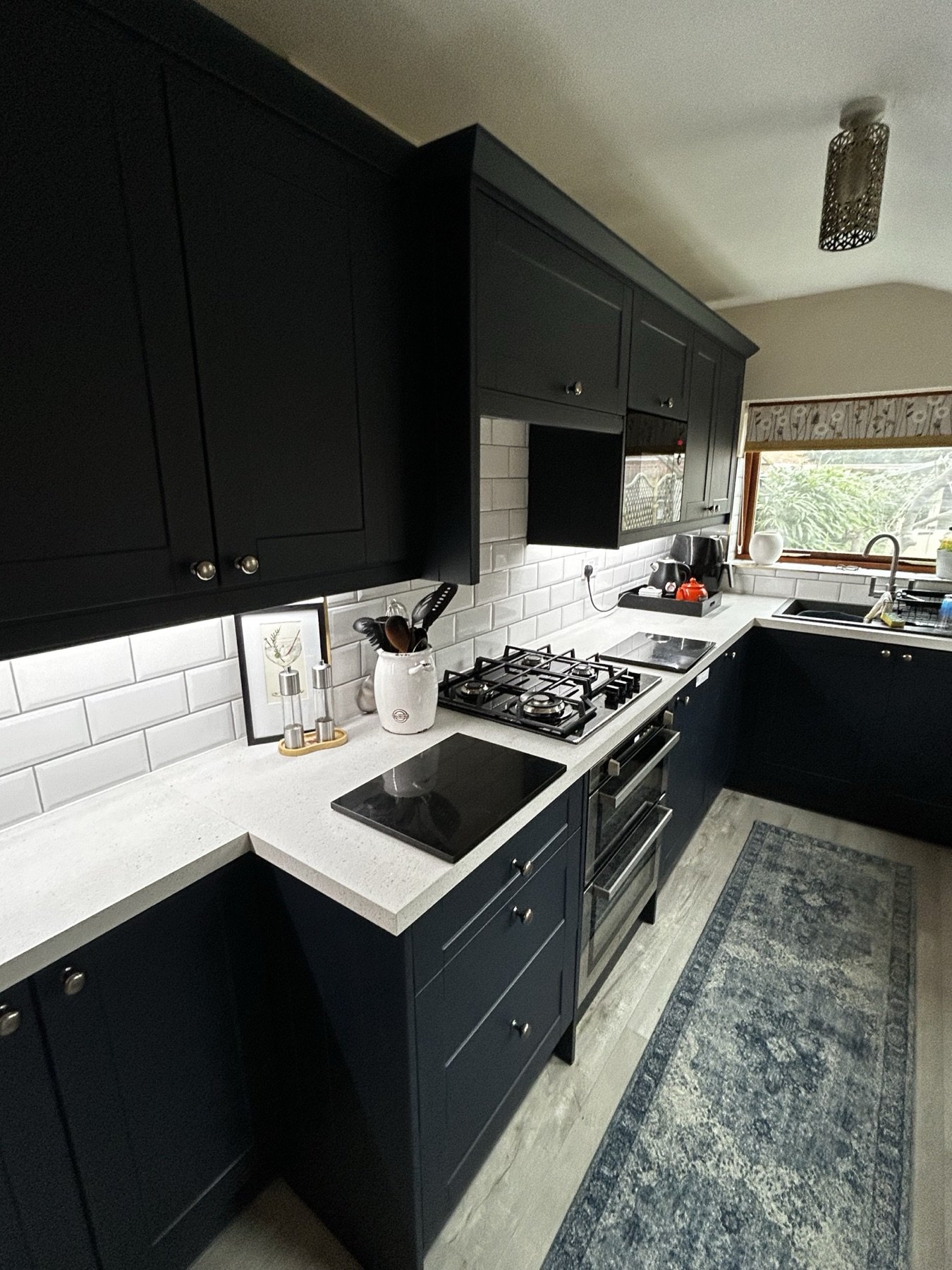
The two most popular kitchen styles compared — Shaker and handleless — to help you choose the right look for your home, your habits and your budget.
Once you've decided to invest in a new kitchen, the next question is nearly always about style — and for most people it comes down to two choices: classic Shaker or sleek handleless. Both are beautiful, both are timeless in their own way, and the "right" one depends less on trends and more on your home and how you live. Here's an honest comparison.
The Shaker kitchen
The Shaker is the enduring classic — a framed door with a recessed centre panel, understated and endlessly adaptable. It's the style you'll still love in fifteen years.
- Best for: period homes, cottages, and anyone who wants warmth and character. It sits beautifully in older properties but works just as well in a new build wanting a bit of soul.
- The look: paired with a Belfast sink, a range cooker and a natural worktop, it's the quintessential country kitchen. In a deep navy or sage green with brushed hardware, it feels current and confident.
- Worth knowing: the framed detail and handles give it texture and grip — genuinely practical if you've got children or you're in and out of cupboards with full hands.
The handleless kitchen
Handleless is the modern choice — clean, flat doors with no hardware at all, opened by a routed grip or a recessed rail. It's minimal, architectural and quietly premium.
- Best for: open-plan spaces, contemporary homes, and anyone who loves a calm, uncluttered look.
- The look: in a soft grey gloss or matt finish, with quartz worktops and warm timber flooring, it feels like a design-magazine kitchen — especially built around an island.
- Worth knowing: with nothing to catch the eye (or your sleeve), it makes a room feel bigger and more serene. Fingerprints show more readily on gloss, so a matt finish is often the sensible middle ground.
So which should you choose?
A few honest pointers:
- Match the house. A handleless kitchen in a 1900s cottage can feel at odds with the building; a Shaker in a sharp new-build extension can feel like it's holding the space back. The best kitchens feel inevitable in their setting.
- Think about how you cook. Busy family kitchen with kids? The grip of Shaker handles is a small daily pleasure. A serene, minimal space you keep pristine? Handleless every time.
- Don't chase the trend. Both styles have proven they last. Choose the one you'll still smile at on a wet Tuesday morning.
There's no wrong answer here — only the one that's right for your home. That's exactly what a good design conversation is for.
Think about cleaning and daily use
Style matters, but the kitchen has to work on a normal Tuesday morning as well as it does in a showroom photo. Shaker doors have rails, panels and handles, which means a little more detail to clean. In return, they give you something solid to grip and they hide day-to-day marks well, especially in painted or grained finishes.
Handleless kitchens are cleaner visually, but the exact door system matters. J-pull doors, rail systems and push-to-open mechanisms all feel different in use. Some are easier with wet hands. Some are better for heavy drawers. Some need more care to keep looking sharp.
That is why it is worth choosing the door style around how the kitchen will actually be used, not only how it looks in a brochure.
Match the worktop and handles to the style
A Shaker kitchen can change completely depending on the worktop and handle choice. Brass, pewter, matt black or brushed steel hardware all give a different feel. Timber worktops make it warmer; quartz can make it feel more refined.
A handleless kitchen usually relies more on clean lines, lighting and worktop choice. The fewer visible details there are, the more important the installation becomes. Door gaps, end panels, appliance lines and worktop edges all have to be right because there is nowhere for sloppy fitting to hide.
What suits Warwickshire homes?
Across Warwickshire and the Midlands, Tim sees both styles work well. Older cottages, terraces and character properties often suit Shaker because it feels more settled in the building. New-build homes, extensions and open-plan rooms often suit handleless because it keeps the space calm and uncluttered.
But there are no fixed rules. A modern Shaker can look sharp in a new extension, and a soft matt handleless kitchen can work beautifully in an older home if the colours and materials are chosen carefully.
Fitting quality still decides the result
The best style choice will not rescue poor installation. Shaker doors need even gaps and straight handles. Handleless doors need clean alignment and careful setting out. Worktops, panels, plinths and trims all need fitting with the chosen style in mind.
Before deciding, look at real finished kitchens and ask how the fitting will be handled. The design choice is important, but the finish is what you will live with every day.
Still not sure? That's completely normal — and it's the best reason to book a consultation. Tim will look at your space, talk through how you actually use your kitchen, and help you land on a style you'll love for years. Have a look through recent kitchens for inspiration, then get in touch.
Thinking about a new kitchen?
Book a relaxed, no-obligation design consultation with Tim — a clear, honest quote and a kitchen designed around how you live.
Book a Consultation See Recent Kitchens